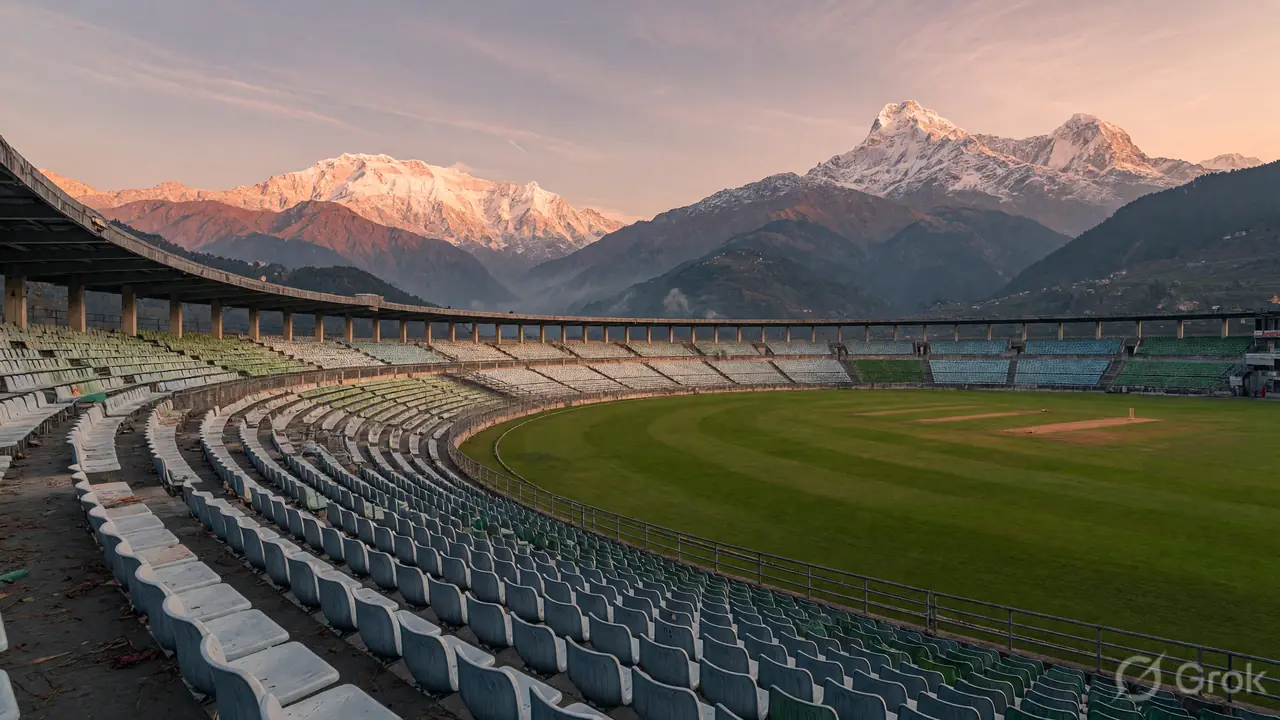
Why Dharamshala dictated the picks
Captain and vice-captain slots in any Dream11 line-up are worth 2x and 1.5x the points scored, which means the choice of multiplier is built almost entirely on a single question: who benefits most from this specific pitch on this specific day. At most venues that question has a soft answer; the read leans on recent form, on a batter's record against a particular bowler, on dew expectations. At the HPCA Stadium the read is sharper, because the venue itself compresses the relevant variables into one signal. The 1,457-metre altitude thins the air, the ball carries to the boundary cleanly, and the outfield is one of the quickest on the Indian circuit. The result is a surface that compresses the venue scoring rate above the league average and pushes the captain-pick math in one direction: top of the order, batting first or chasing, on a flat track where placement matters more than power.
That is the spine of the four picks for Match 55. Prabhsimran Singh at the top of the PBKS order, Shreyas Iyer at three for Punjab and as captain multiplier, Pathum Nissanka opening for Delhi, and Cooper Connolly as the left-handed middle-order option for the Kings. Each of those names maps to a venue read first and a form read second. The form window matters — Prabhsimran had 364 runs in his last ten innings and KL Rahul, mentioned downstream, sat on 468 in his last ten — but the captain-pick logic was constructed from the venue outward, not from the form sheet inward.
For fantasy readers replaying this fixture retrospectively, the lesson is method, not outcome. The picks below were not chosen because the batters are universally good. They were chosen because Dharamshala's altitude profile rewards exactly the batting slot and the bowling type that those names occupy. Apply the same venue-first filter to the next HPCA fixture and the picks will read the same way, regardless of who is in form on that particular day.
Dharamshala's 1,457-metre altitude is the captain-pick filter. The first-innings average sits around 182. The outfield runs fast. The captain call belongs to the top of the order on a flat track, not to the bowling all-rounders in the middle.
The 1,457-metre altitude factor
Stadium altitude is the most underweighted variable in casual fantasy cricket, and Dharamshala is the clearest example of why. At 1,457 metres above sea level the air is roughly 17 per cent thinner than at Mohali or Wankhede. That thins out the swing movement that normally settles pace bowlers in the powerplay, lets the ball carry four or five metres further on the full, and removes the lacquered-seam grip that cutters rely on through the middle overs. Quicker bowlers feel it most — the ball does not deviate in the air, which means a half-volley on leg stump at Mohali stays a half-volley at Dharamshala. The square boundaries at HPCA are also shorter than the venue averages, which compounds the same effect at the back end of an innings.
The aggregate of those three effects — thinner air, shorter square boundaries, fast outfield — is the ~182 first-innings average the venue has produced across the last two IPL seasons. That is comfortably above the IPL 2026 competition average. It is also the reason why spinners with control become more valuable than spinners with wicket-taking variation. Yuzvendra Chahal for Punjab and Axar Patel for Delhi both earn their fantasy runs through containment on a venue that does not grip for turn; a fourth-stump slider from a wrist-spinner at sea level becomes a low full-toss at altitude. Pace bowlers who can hit the hard length and bend the ball back into the right-hander — Mitchell Starc, Arshdeep Singh, Marco Jansen — are the wickets, not the runs.
The captain picks downstream reflect that read. Three of the four named batters (Prabhsimran, Iyer, Nissanka) bat in the top four of their respective orders. The fourth (Connolly) bats at three for Punjab and is left-handed, which gives him a natural match-up advantage against the DC seam attack on a flat track. None of the four is a spin-bowling all-rounder, because the captain multiplier should not sit on a bowler whose primary value is containment rather than wickets on a venue like Dharamshala.
How Prabhsimran Singh and Shreyas Iyer map to the altitude
Prabhsimran Singh opens the innings for Punjab Kings, and the captain multiplier on his name for Match 55 came from a simple venue arithmetic. He was averaging 364 runs across his last ten innings going into the fixture, which is a strong number on any surface, but the multiplier was set higher because the slot he occupies — opener, left-handed, square-boundary hitter — is exactly the slot the Dharamshala surface rewards. The ball carries through to the point region at HPCA, square boundaries sit shorter than straight, and Prabhsimran's placement game between cover and point is the technique that picks up boundaries on this kind of track without needing to clear the rope. Add to that the wicketkeeper credit for the Dream11 system and the captain call writes itself.
Shreyas Iyer is the differential captain read, not because his form was louder than Prabhsimran's but because his role is different. Iyer bats at three for Punjab, leads the side as captain, and carries a venue memory from the earlier PBKS vs DC fixture of this season at the Arun Jaitley Stadium where he scored a fluent half-century against this DC bowling group on a flat track. The Arun Jaitley surface is not HPCA, but the read transfers because the opposition bowling core is the same and the surfaces share a flat-bat, place-the-ball character. For multi-entry contests above 1,000 entries, the optimal build was Prabhsimran as captain in the safe line-up and Iyer as captain in the differential build; for small-entry or head-to-head contests, Prabhsimran as captain and Iyer as vice-captain kept the upside in one line-up.
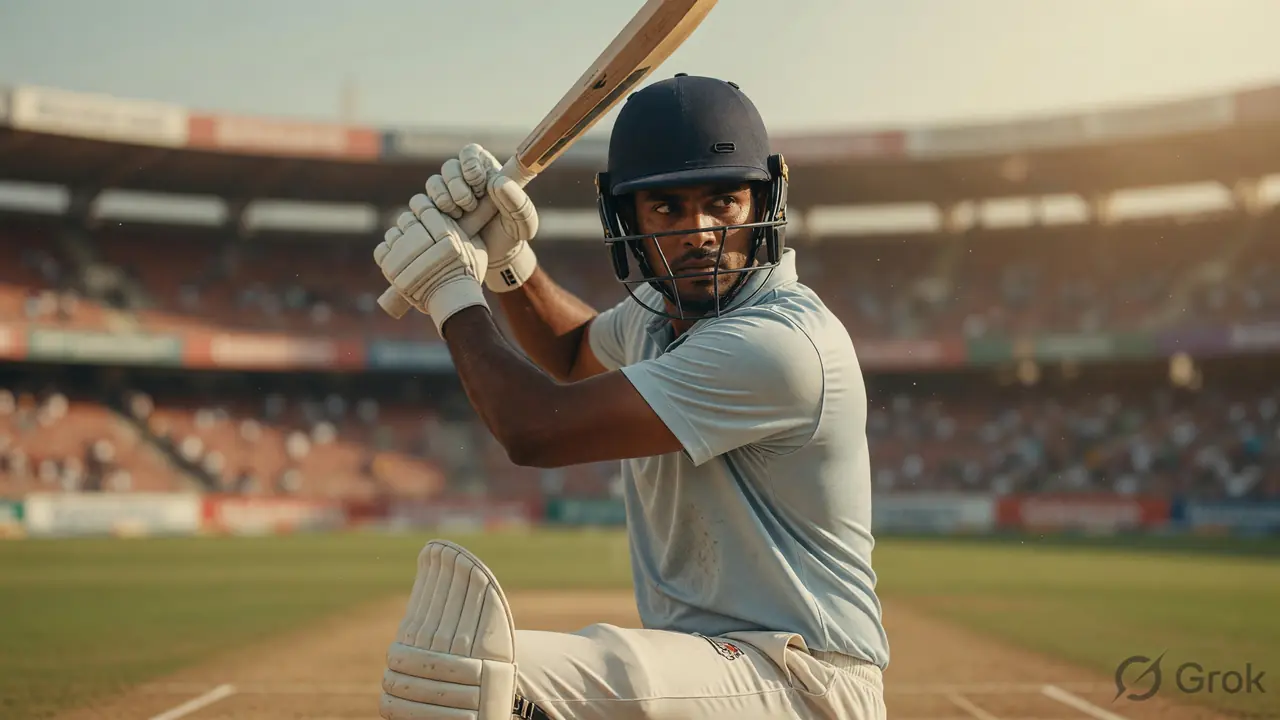
How Nissanka and Connolly fit the same venue
The vice-captain picks follow the same altitude-first logic. Pathum Nissanka is the safe vice-captain for the same reason Prabhsimran is the safe captain: he opens the innings for Delhi Capitals, bats left-handed, faces the new ball, and his placement game through the powerplay matches the venue's short square boundaries. The form window supports the read but does not drive it — the slot is what the captain multiplier rewards at Dharamshala. Cooper Connolly is the differential vice-captain because he bats at three for Punjab, is left-handed, and offers a multiplier slot for contests where the obvious captain calls are crowded out by ownership percentage. On a venue where left-handers have historically done well at altitude, Connolly is a leverage slot rather than a floor slot — the upside on a flat track with short square boundaries is real, even if his ceiling on a turning track would be lower.
Two names worth a slot but not the captaincy multiplier on this fixture: KL Rahul, who sits on 468 runs in his last ten innings and is a strong keeper-batter anchor for any Dream11 line-up, and Axar Patel, who is the spin-bowling all-rounder axis for Delhi. Both belong in the XI. Neither is the captaincy call on a Dharamshala surface that rewards the top-order batters more cleanly than the bowling all-rounders, which is the entire altitude-first argument run in two paragraphs.
The bowling math that supports the captain picks
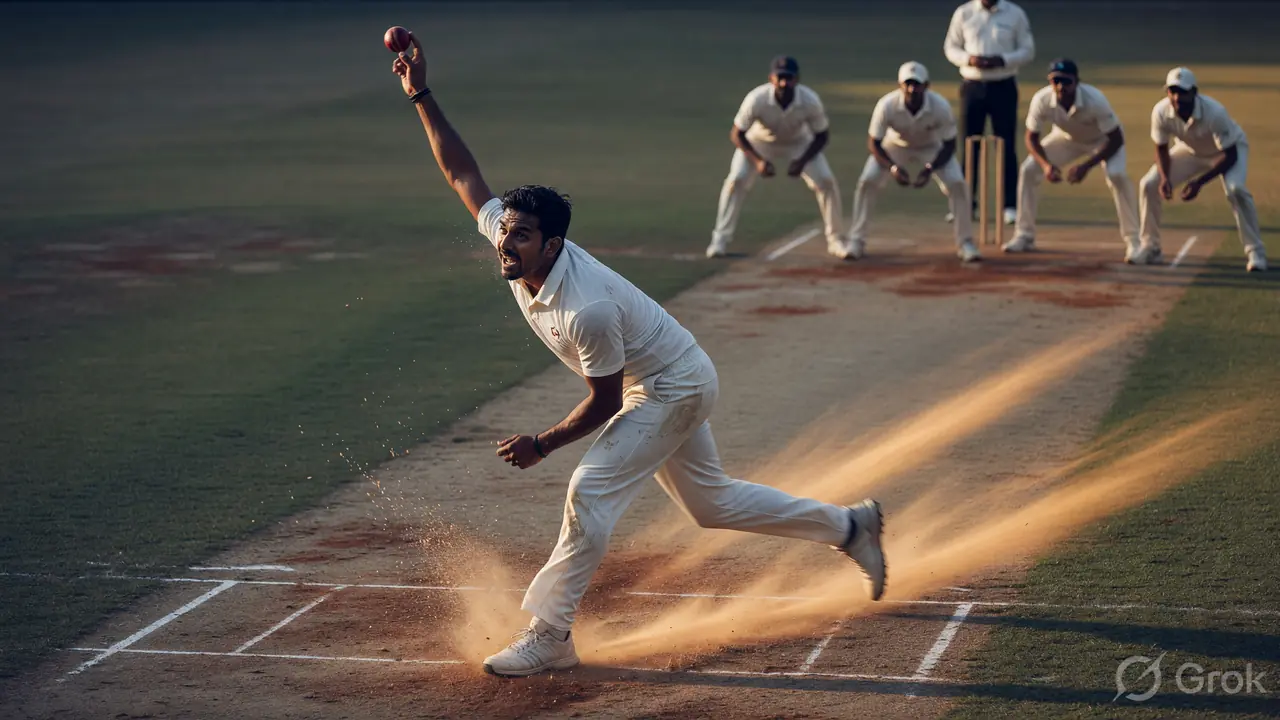
Captain picks only hold if the bowling side of the Dream11 line-up is structured around the same venue read. The fast-bowling core for Match 55 sat on three names: Mitchell Starc and Lungi Ngidi for Delhi, Arshdeep Singh and Marco Jansen for Punjab. Starc is the highest-ceiling wicket-taker option in either XI and a candidate for the bowling captain multiplier in tournament-large multi-entry builds; Arshdeep is the PBKS equivalent on the new ball; Jansen earns his slot as the left-arm pace all-rounder option who also picks up lower-order runs. The captain picks above were built to score above 180 on a Dharamshala surface that allows it; the bowling core is built to take 6 to 8 wickets at a venue where pace bowlers with hard-length discipline still earn their keep, even when the runs are easier to come by than at sea level.
The spin picks follow the containment logic. Yuzvendra Chahal as the likely impact player for PBKS, Axar Patel as the spin-bowling all-rounder for DC. Neither is a captain pick. Both are 7.5 to 8.5 credit slot players whose value is built on a venue that does not turn but rewards a bowler who can hold one end through the middle overs without giving away boundary balls. The fantasy reader replaying this fixture should treat the spin slots as line-up ballast: necessary, valuable, and never the captaincy call.
Two Dream11 teams built for the altitude
The two teams below are built around the captain and vice-captain calls above, with the bowling core from both sides anchored on the hard-length pace bowlers who match the venue. Team 1 is the balanced build for contests of any size. Team 2 is the PBKS-heavy differential build for multi-entry contests where ceiling matters more than floor. Both assume a chase-first toss call and a venue first-innings score above 180.
Team 1 — Balanced (altitude-first)
- Prabhsimran Singh (wk) (c)
- Priyansh Arya
- Pathum Nissanka (vc)
- KL Rahul
- Shreyas Iyer
- Cooper Connolly
- Marcus Stoinis
- Axar Patel
- Marco Jansen
- Mitchell Starc
- Arshdeep Singh
Team 2 — PBKS-Heavy differential
- Prabhsimran Singh (wk)
- Priyansh Arya
- Pathum Nissanka
- KL Rahul
- Shreyas Iyer (c)
- Cooper Connolly (vc)
- Marcus Stoinis
- Suryansh Shedge
- Axar Patel
- Mitchell Starc
- Lockie Ferguson
Probable XIs for Match 55
The probable XIs that follow were the most likely starting combinations for IPL 2026 Match 55, based on the squads announced for the season, the combinations used in the last completed match for each side, and the impact-player slots expected at HPCA. The bowling core for each side was structured around the hard-length pace option above; the impact-player slot was reserved for the spin-bowling containment axis.
Punjab Kings (PBKS)
- Priyansh AryaOpener
- Prabhsimran Singh (wk)Opener
- Cooper ConnollyTop order
- Shreyas Iyer (c)Top order
- Suryansh ShedgeMiddle order
- Marcus StoinisAll-rounder
- Shashank SinghMiddle order
- Marco JansenPace all-rounder
- Vijaykumar VyshakPace
- Lockie FergusonPace
- Arshdeep SinghPace
Impact player: Yuzvendra Chahal (leg-spin).
Delhi Capitals (DC)
- Prithvi ShawOpener
- Pathum NissankaOpener
- KL RahulTop order · wk
- Sameer RizviTop order
- Tristan StubbsMiddle order
- Axar PatelAll-rounder · spin
- Ashutosh SharmaMiddle order
- Vipraj NigamAll-rounder
- Ajay MandalSpin
- Mitchell StarcPace
- Lungi NgidiPace
Impact player: Mukesh Kumar (pace).
The toss math at altitude
The toss call at Dharamshala in mid-May is the only soft variable in an otherwise firm venue read. Chasing teams win just under half of completed matches at the HPCA, and the dew window in evening fixtures helps the chasing side grip the ball cleanly through the second-half innings. Whichever captain wins the toss on 11 May 2026 is therefore likely to bowl first, and the Dream11 captain picks above are built around a chase-first mindset. A first-innings score above 180 at this venue is chaseable; a score below 170 is not, on most evenings, with a batting order structured like these two. The captain-pick ceiling on the four names above sits at the chasing total, not the defending total.
For the next HPCA fixture, the same altitude-first filter applies: read the venue card first, fit the form window second, and never put a captain multiplier on a bowling all-rounder whose value depends on a track turning. The picks will read the same way. The numbers might not, but the method will.
Match FAQ
What makes HPCA Dharamshala different from other IPL venues?
HPCA Stadium sits at 1,457 metres above sea level, which makes it the highest-altitude regular IPL venue on the circuit. The thinner air reduces swing movement for pace bowlers in the powerplay, lets the ball carry four or five metres further on the full, and pairs with a fast outfield and short square boundaries to push the first-innings average to roughly 182 runs — comfortably above the IPL 2026 competition average. The venue rewards top-of-the-order batters who can place the ball rather than rely on power, and pace bowlers who can hit the hard length rather than rely on seam movement.
Why was Prabhsimran Singh the safe captain pick for Match 55?
Prabhsimran Singh opened the innings for Punjab Kings and brought 364 runs across his last ten matches into the fixture. The captain multiplier was set on his name because the opener slot, combined with his left-handed placement game and wicketkeeper credit, mapped directly onto the Dharamshala venue card: short square boundaries, fast outfield, and reduced swing through the powerplay. The form number supported the pick; the venue slot drove it.
Why was Shreyas Iyer the differential captain pick?
Shreyas Iyer bats at three for Punjab and led the side as captain. The differential read came from a venue-memory angle: he had scored a fluent half-century in the earlier PBKS vs DC fixture of this season at the Arun Jaitley Stadium against this DC bowling group on a flat track. The Arun Jaitley surface is not HPCA, but the opposition and the flat-track character are similar enough that the differential call worked in multi-entry contests above 1,000 entries.
Why was Pathum Nissanka the safe vice-captain?
Pathum Nissanka opened the innings for Delhi Capitals and batted left-handed, which gave him the same venue slot that drove the safe captain pick on the other side. The vice-captain multiplier on his name followed the same altitude-first logic: opener, left-handed, placement game, short square boundaries. The form window supported the read but did not drive it.
Why was Cooper Connolly the differential vice-captain?
Cooper Connolly bats at three for Punjab and is left-handed. On a venue where left-handers have historically done well at altitude, and in contests where the obvious captain calls were crowded out by ownership percentage, Connolly offered a leverage slot. The upside on a flat track with short square boundaries was real; the floor on a turning track would have been lower, but the venue card for HPCA did not turn.
What was the bowling strategy at Dharamshala on 11 May 2026?
The bowling strategy for both sides at HPCA in mid-May 2026 was structured around hard-length pace and spin containment. Mitchell Starc and Lungi Ngidi operated the new ball for Delhi, Arshdeep Singh and Marco Jansen did the same for Punjab. Yuzvendra Chahal and Axar Patel held one end each through the middle overs. The pace bowlers earned their runs through wickets, not containment; the spinners earned theirs through containment, not wickets. The captain picks above were built around a chase-first toss, which means the bowling core was always going to face a target in the high 170s to low 190s, on a track that did not give the bowlers much help.
What was the head-to-head record between PBKS and DC going into Match 55?
Punjab Kings had 18 wins and Delhi Capitals had 17 wins from 36 completed meetings, with one no result. At HPCA Stadium specifically the record was even — 2 wins each. The captain picks on 11 May 2026 were not driven by the head-to-head ledger; they were driven by the venue card and the recent individual form of the top-order batters on each side.
The HPCA Dharamshala altitude is the captain-pick filter that held for Match 55 and will hold for the next fixture at the venue. Read the venue card first, fit the form window second, and the picks will follow. Apply the same method to any other high-altitude ground on the IPL calendar and the captain calls will read the same way: top of the order, batting first or chasing, on a flat track where placement beats power.