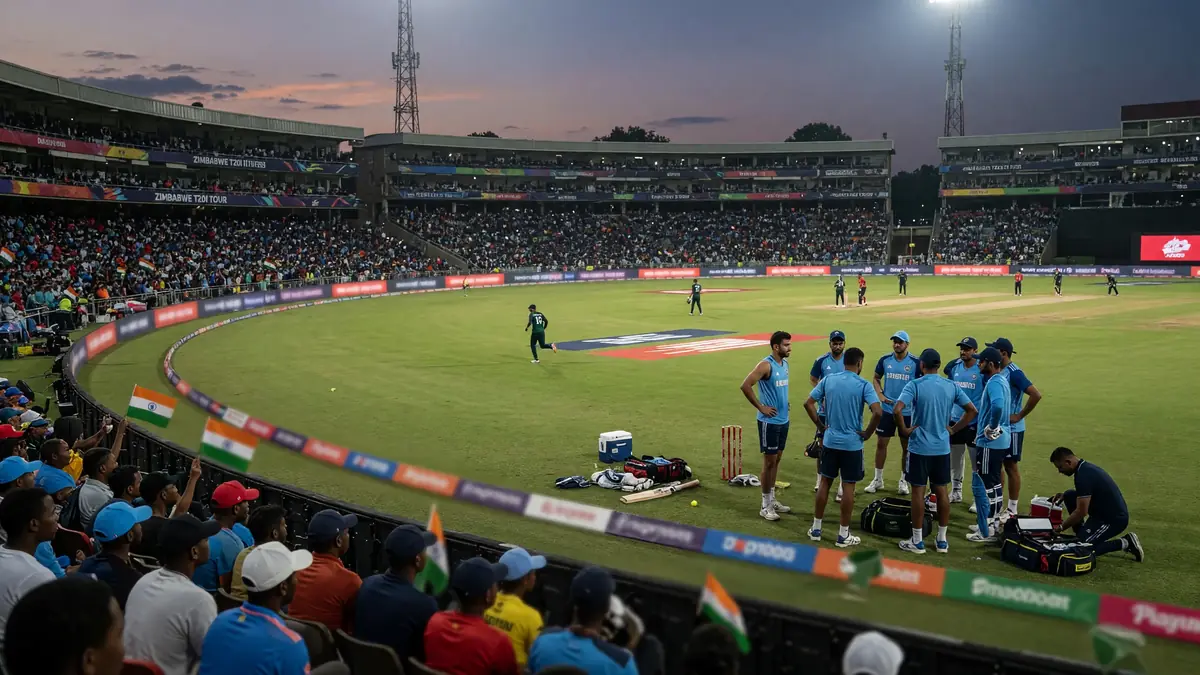
What the 12 July call-up changed
India’s three T20Is in Zimbabwe later in July 2026 were already on the calendar when the squad list moved again. On 12 July 2026, Ravi Bishnoi was added in place of Varun Chakravarthy. Bishnoi had not been named in the original Zimbabwe T20I party. He entered only after selectors judged that Varun needed more recovery time from a hamstring problem first flagged during the England series.
This piece is a dated retrospective. It does not treat the Zimbabwe tour as breaking news. It rebuilds the verified board as contemporary reporting recorded it: the medical grades, the England T20I numbers for both wristspinners, the separate Harshit Rana withdrawal that reshaped the ODI leg, and the expected arrival of the Zimbabwe-bound group in Harare on 20 July 2026 under head coach VVS Laxman.
For fantasy managers and form readers, the story is a pure selection-and-availability note rather than a match report. Two IPL-hardened wristspinners swapped places on an international short list. One left with a Grade 2 scan. The other arrived carrying a raw England spell that had already been publicly expensive. That tension — medical necessity versus recent form — is the factual spine of the day.
How Varun’s injury closed the door
Varun Chakravarthy missed the last two T20Is of the England series with a hamstring injury. A BCCI release later filled in the mechanism. During the third T20I against England he reported sudden left-hamstring discomfort. An MRI returned a Grade 2 hamstring injury. On that medical reading he was ruled out of the Zimbabwe T20Is rather than managed through a compressed recovery.
The England numbers that preceded the scan were already thin. Across two T20Is he took one wicket at 10.28 runs per over. That is not a form peak by any wristspin standard, and it sat on top of a longer physical story from the domestic season. Late in IPL 2026 he had fractured his left toe, played through pain, and then missed India’s T20Is against Afghanistan and Ireland. By the time the Zimbabwe list was finalised, the body of work around him was a mix of interrupted availability and modest white-ball returns.
Grade 2 is the decisive administrative fact. Selection rooms can absorb a Grade 1 with load management. A Grade 2 on the left hamstring, confirmed by MRI after on-field discomfort, is a different decision tree — especially with a three-match away T20I series arriving inside a tight window. The board did not leave Varun in the party on a hope timeline. It removed him and opened a wristspin seat.
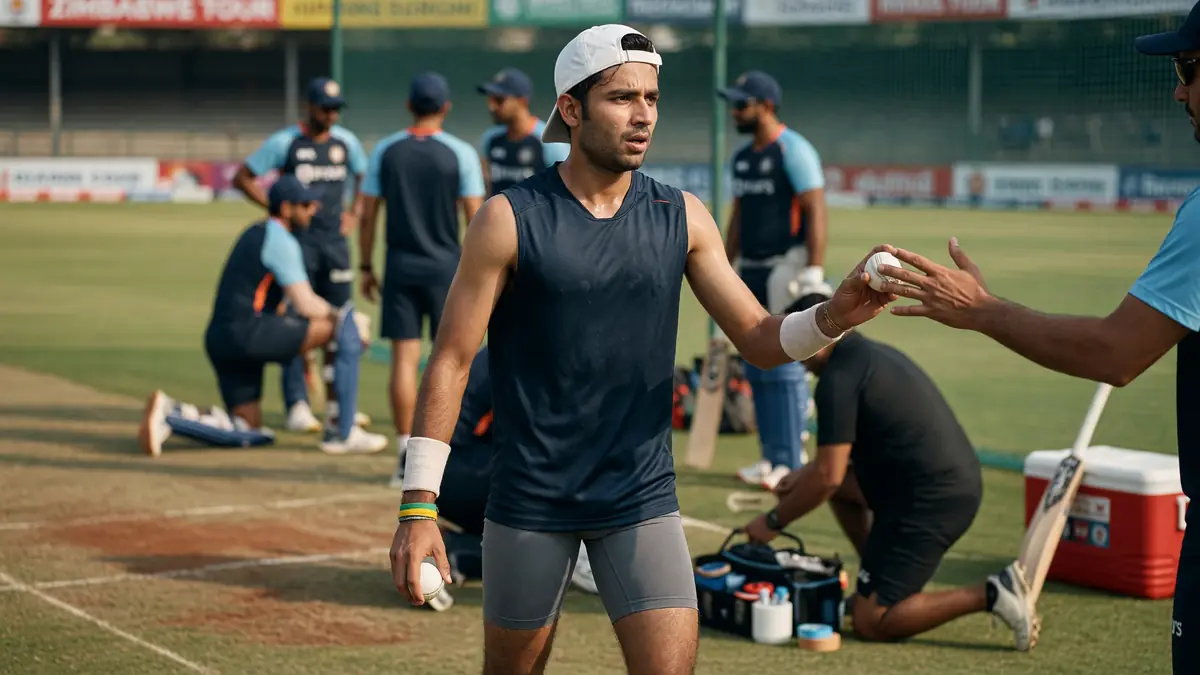
Bishnoi’s England form before the call-up
Ravi Bishnoi had played the first two England T20Is. In the second, at Old Trafford, he conceded 60 runs in four overs and bowled three back-foot no-balls. That single spell is the clearest form mark attached to his name in the verified dossier. It does not erase his longer T20 résumé, and it does not invent later Zimbabwe figures that were not yet played. It does explain why the 12 July addition read as a contingency choice rather than a reward for a peak series.
Selectors still chose him when Varun’s recovery clock failed the Zimbabwe timeline. Bishnoi was available, already inside the England white-ball environment, and familiar as a go-to IPL wrist option. The original Zimbabwe squad had left him out. The revised list brought him back only after the medical ruling. That sequence matters for how the rating should be framed: not a clean promotion on form, but a forced re-entry driven by another spinner’s injury grade.
“Bishnoi’s Old Trafford night — 60 in four with three back-foot no-balls — sat beside Varun’s Grade 2 scan on the same selection ledger. Zimbabwe needed a wristspin name; availability, not the England economy, decided which one travelled.”
Fantasy reconstruction of the moment should hold both truths at once. Bishnoi remained a high-usage franchise wristspinner with a long trail of IPL overs. He also carried a public, expensive England outing into the call-up. Anyone pricing him for the Zimbabwe window had to start from that split: pedigree and role security on one side, a raw international economy on the other, with no Zimbabwe match figures yet available inside this retrospective record.
The parallel pace change: Rana out, Prince Yadav stays
The same third T20I at Trent Bridge that damaged Varun’s hamstring also altered India’s pace inventory. Harshit Rana reported right-hamstring discomfort in that match. Scans showed a Grade 1 injury. He was ruled out of the forthcoming ODI series in England. The grade was lighter than Varun’s, but the series destination was different: Rana’s exit hit the ODI leg, not the Zimbabwe T20I list.
Prince Yadav had previously been named only in the England T20I squad. After Rana’s withdrawal he stayed back in England for the ODI leg. That is a separate personnel move from Bishnoi’s Zimbabwe addition, and the two should not be collapsed into one narrative. One was a wristspin replacement for a three-match T20I tour. The other was a pace retention inside England after a Grade 1 scan removed Rana from the 50-over fixtures.
Still, the calendar link is real. One England T20I night produced two hamstring files — left-side Grade 2 for Varun, right-side Grade 1 for Rana — and two different administrative answers. Varun left the Zimbabwe T20I party. Rana left the England ODIs. Bishnoi and Prince Yadav filled the respective gaps. For player-rating work, that is a clean example of how one match window can rewrite two format lists without a single common replacement logic.
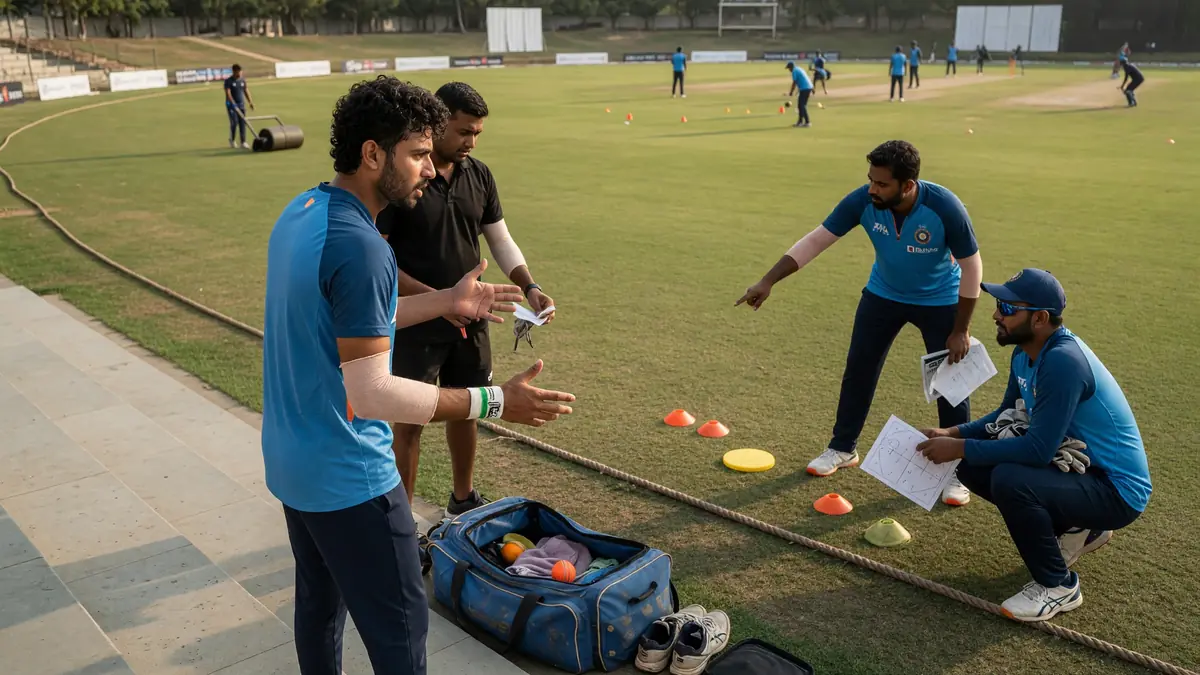
IPL context on the wristspin ledger
Both names on this swap carry heavy IPL identities. Varun’s late-season toe fracture in IPL 2026 is part of the verified physical backlog that followed him into the England white-ball window. Playing through that pain, then missing T20Is against Afghanistan and Ireland, left him short of an uninterrupted international runway before the hamstring event at Trent Bridge. Bishnoi’s franchise stock has long rested on googly-led middle-over control and death variations, the same toolkit India has repeatedly sampled in T20 squads.
None of that IPL résumé, by itself, decides a Zimbabwe XI. What it does is explain why the board reached for Bishnoi rather than an uncapped surprise when Varun’s Grade 2 closed the file. The replacement was drawn from the existing white-ball shortlist, not from a developmental left-field pick. For readers who track franchise form into national ratings, the 12 July move is continuity under injury pressure rather than a philosophical shift in India’s T20 spin profile.
Ongoing form boards and role grades for the wider India and IPL pool sit inside our player ratings coverage. The Bishnoi–Varun swap belongs on that board as a medical-driven wristspin change dated 12 July 2026, not as a mid-series performance coronation.
Coaching staff and the Harare arrival window
India’s Zimbabwe T20I squad was expected to reach Harare on 20 July 2026. VVS Laxman was listed as head coach, assisted by Sunil Joshi and Hrishikesh Kanitkar. Those three names fix the support structure around the touring party once the flight window opened. They do not, inside this verified record, disclose net plans, pitch briefs or final XIs for the three T20Is.
The eight-day gap between the 12 July announcement and the 20 July arrival is the practical planning strip. Bishnoi had time to reset after the England leg. The medical staff had time to close Varun’s Zimbabwe file and shift rehabilitation off the touring list. Prince Yadav, by contrast, was already being redirected inside England for ODIs. Three different body-management tracks ran in parallel off one cluster of England T20I discomfort reports.
Retrospective value here is administrative clarity. Readers do not need invented Harare pitch talk. They need the dated sequence: injury confirmation, squad rewrite, coach assignment, arrival estimate. That is the full verified logistics chain for the Zimbabwe T20I party as of the 12 July reporting window.
How the ratings board should store the day
Player-rating ledgers are often tempted to over-read a single call-up. The disciplined read of 12 July 2026 is narrower. Varun’s grade and recent economy explain his exit more cleanly than any speculative loss of trust. Bishnoi’s addition explains availability and role familiarity more cleanly than a claim that Old Trafford had been forgotten. Rana’s Grade 1 and Prince Yadav’s ODI stay explain a second, format-specific adjustment rather than a single sweeping selection purge.
Three rating tags are enough. Tag Varun as unavailable for the Zimbabwe T20Is on a confirmed Grade 2 left-hamstring MRI after Trent Bridge discomfort, with a thin England return of one wicket at 10.28 and a prior IPL toe fracture in the background. Tag Bishnoi as a late addition who was outside the original Zimbabwe list, inside the first two England T20Is, and carrying a 60-in-four Old Trafford spell with three back-foot no-balls. Tag the pace side separately: Rana out of England ODIs on Grade 1, Prince Yadav retained in England after a T20I-only starting brief.
Anything beyond those tags — predicted Zimbabwe figures, assumed XI lock-ins, or invented dressing-room hierarchies — steps outside the verified ceiling. The legacy of the day is the clean swap logic, not a finished tour narrative.
Quick reference from the verified board
Frequently asked questions
When was Ravi Bishnoi added to the Zimbabwe T20I squad?
On 12 July 2026. Contemporary reporting, later updated after BCCI confirmation, recorded Bishnoi’s inclusion in place of injured Varun Chakravarthy for India’s three T20Is in Zimbabwe later that month.
Why was Varun Chakravarthy ruled out?
He reported sudden left-hamstring discomfort during the third T20I against England. An MRI showed a Grade 2 hamstring injury. He had already missed the last two England T20Is with the hamstring problem and was judged to need more recovery time than the Zimbabwe schedule allowed.
Had Bishnoi been in the original Zimbabwe squad?
No. He was not in the original Zimbabwe T20I party and was added only after Varun’s injury timeline forced a replacement.
What England T20I numbers followed the two wristspinners?
Bishnoi played the first two England T20Is and, in the second at Old Trafford, conceded 60 runs in four overs with three back-foot no-balls. Varun took one wicket in two England T20Is at 10.28 runs per over.
What happened with Harshit Rana and Prince Yadav?
Rana reported right-hamstring discomfort in the same third England T20I at Trent Bridge. Scans showed a Grade 1 injury and he was ruled out of the England ODI series. Prince Yadav, earlier named only for the England T20Is, stayed in England for the ODI leg after Rana’s withdrawal.
When was the Zimbabwe squad expected in Harare?
The touring party was expected to reach Harare on 20 July 2026, with VVS Laxman as head coach assisted by Sunil Joshi and Hrishikesh Kanitkar.
Twelve July 2026 remains a clean medical-and-selection case study: a Grade 2 hamstring removed Varun Chakravarthy from a three-match Zimbabwe T20I assignment, Ravi Bishnoi filled the wristspin seat after sitting outside the original list, and a separate Grade 1 file on Harshit Rana kept Prince Yadav in England for ODIs. The England economies were mixed, the IPL injury backlog was real, and the Harare arrival window was fixed for 20 July. That is the full verified board worth keeping on the player-ratings ledger.